In an era of overwhelming information and a seemingly endless stream of bad news— how do we find hope? And what should be done with it?
Breaking the Ice
“I’m an environmental science major,” was a line I said a lot my freshman year at college. It got boring, so eventually I started spicing it up with, “Basically a biology major, but y’know, more depressed about it.”
And that worked! It was a fun little ice-breaker, and usually got a laugh or two from my peers who were at best pretty uninterested in environmental science. At worst, they were worried I was going to start lecturing them about it. But self-deprecating humor is a pretty safe bet around college students; it’s an art form we take pride in.
The problem is, I was kind of right: it’s a depressing major.
You spend your time learning about all the ways the environment is dying. Then you learn about all the ways we might be able to fix it. Finally, you slowly acclimate yourself to the realization that, apparently, no one wants to listen to you about it.
I picked up a minor in communications.
I also started this blog, to learn more about the climate crisis, the environment, and the ecosystems all around us. Because yes, the state of the world is often a bleak one, but there are so many people fighting for a better future, and so much hope to turn to.
The Good News
The good news is that the weight of the entire world is not on your shoulders. The weight of the world is on a lot of people’s shoulders (everyone’s!) and many of those people are doing the work that needs to be done. In the face of crisis, progress is being made.
Renewable energy, which is vital in replacing greenhouse-gas-emitting fossil fuels, continues to rise in popularity. As the climate crisis presses nearer and renewable costs continue to drop, more places can justify the switch. Excluding hydropower— which is debatably a source of clean energy at all— global renewable energy generation increased by 73.88% in the past ten years.
More awareness and technological improvements only give renewables more room to grow.
Perovskite solar cells use the crystal structure of metal-halide perovskites to increase solar panel efficiency while potentially lowering costs, and are currently undergoing research for commercialization. Researchers are now achieving nearly 34% efficiency in their solar panels.
In the world of wind power, floating offshore wind turbines are already being successfully implemented off the shores of Scotland, Portugal, the United States, and Norway, collecting energy from stronger winds in deeper waters without using space over land. The Biden Administration set goals to deploy 30 gigawatts of off shore wind power by 2030, creating thousands of union jobs in the process.
And more people work to find increasingly creative, bold, and exciting solutions for climate change. Transparent solar panel windows, net-zero wooden windmills, and algae-based polymers are all solutions being developed for our future Earth.
Meanwhile, as technology advances, social and political change is needed to implement new solutions. Organizations all over the globe work to topple existing systems of fossil fuel dependency, and even in the face of powerful opposition, their work yields results.
Whereas this past election cycle was in many ways bleak, some states still managed climate wins.
California passed Proposition 4, which authorized $10 billion for the state to use towards conservation and climate action projects.
Louisiana passed a constitutional amendment that mandates all state funds generated from renewable energy go to the Louisiana Coastal Protection and Restoration Fund.
And when South Dakota legislators tried to loosen restrictions around carbon pipeline construction, voters fought back to stop Referred Law 21 from going into action.
Efforts to create a better future for planet Earth haven’t stopped, won’t stop, and need as many hands as they can get. The fight for a better world is one that will never be over, as any wins we make must be carefully maintained. Now, as we sit on the edge of climate turning points, making decisions that will affect our planet for generations, there truly is no better time to join the fight.
… And What to Do About It
Big oil companies, politicians, and lobbyists are not waiting for one very eloquent person to stand before them and profess why they are wrong. They already know that they’re wrong, and have for decades. The only thing they’ve done with the knowledge is tried to hide it.
You don’t need to be that perfectly articulated, educated person, because they don’t exist. And if they did, it wouldn’t matter.
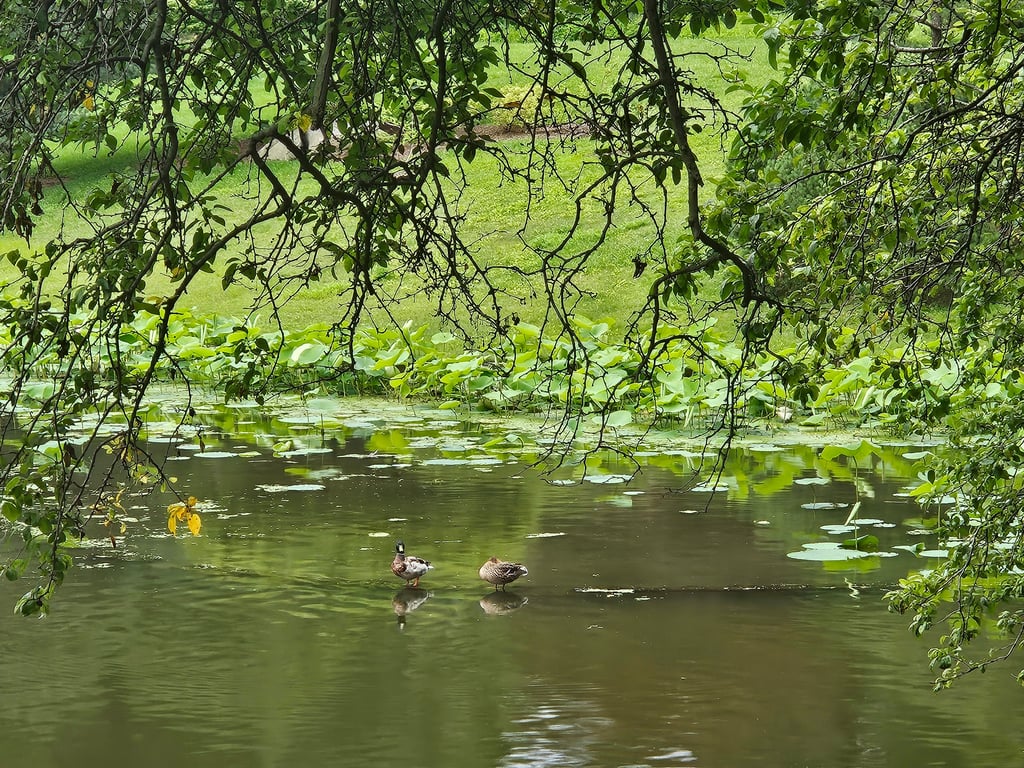
When I started this blog, I sat with a list of names staring back at me. Some early contenders were Raindrop Thoughts, Cozy Earth, Mossy Trails, and about a half a dozen that included ducks in some way. But against all of those, winning out over even the ducks(!!), I had my choice nearly from the very start.
Being ‘a drop in the bucket’ is often seen as a bad thing, an expression of one meaningless action against a far larger task. But drop by drop is how you fill a bucket, and step by step is how we create change. Drops in the Pond is a nod to the power of collectivist action, because each other is all we’ve got.
In the moments where the work has worn on me, when the bad news has become too much, that’s the message I’ve found myself coming back to. There are people in my community who do care, even when it feels like everyone’s abandoned the cause. They haven’t given up, so how can I give up on them?
What you need to be is a voice among many, someone willing to stand in front of those in power and tell them that they need to stop what they’re doing, or there will be consequences. And they will believe us, because we will stand in the hundreds of thousands and give them no other choice but to drown.
So start today: find a local climate activist group you can join, look into learning how to mend your own clothes, or pick up a book on environmentalism. Do whatever makes the most sense to you as your first drop in the pond of global action. And then do it again, and again, and again.
 Made with Bullet